 An official website of the United States Government
Official websites use .gov
A .gov website belongs to an official government organization in the United States.

A .gov website belongs to an official government organization in the United States.

A lock or https:// means you’ve safely connected to the .gov website. Share sensitive information only on official, secure websites
 |
In late August 2017, the Arkema chemical plant in Crosby, Texas experienced a catastrophic series of fires following Hurricane Harvey. Flooding disabled refrigeration systems used to stabilize stored organic peroxides, leading to their decomposition and combustion. The incident resulted in multiple fires, the evacuation of surrounding communities, and medical treatment for emergency responders exposed to toxic fumes. This case study examines the medical management and safety considerations associated with the incident.
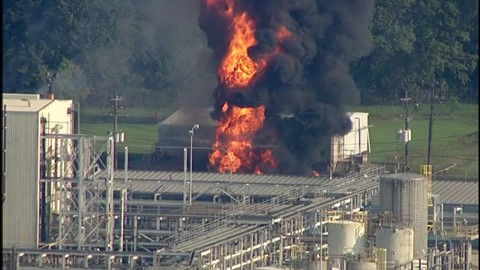
The Arkema Crosby facility manufactures organic peroxides, which are highly reactive and must be stored at low temperatures. During Hurricane Harvey, unprecedented flooding disabled both primary and backup refrigeration systems. Despite efforts to transfer chemicals to refrigerated trailers, rising water compromised these systems. Over 350,000 pounds of organic peroxides decomposed and combusted, resulting in three fires and the release of toxic fumes. Twenty-one emergency responders sought medical attention, and a one and a half mile evacuation zone was established.
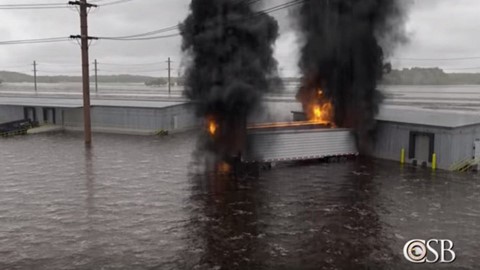
Organic peroxides are a class of thermally unstable liquid or solid organic chemicals that are a derivative of hydrogen peroxide. When heated under confinement or subject to friction, they may detonate or deflagrate rapidly and violently.
Organic peroxide exposure can result in the following symptoms:
The CDC does not offer substance-specific medical management guidelines for organic peroxide exposure; however, the following treatment recommendations adhere to broader chemical emergency response guidance, including:
Twenty-one emergency responders were treated for exposure to fumes. Symptoms included respiratory distress, eye irritation, and nausea. Given the potential health effects on the public, evacuation orders were issued for residents within a one and a half mile radius, and Highway 90 was temporarily closed.
Emergency responders received symptomatic treatment including oxygen therapy, bronchodilators, and intravenous fluids. Decontamination procedures included removal of contaminated clothing and thorough skin and eye irrigation. Several individuals were monitored for delayed pulmonary and neurological effects.
First responders should initiate decontamination by removing victims from the exposure zone, removing contaminated clothing, and irrigating exposed skin and eyes with copious amounts of water.
Responders must wear appropriate PPE, including Level A or B protection with self-contained breathing apparatus (SCBA). Organic peroxide-specific detectors (such as photoionization detectors or colorimetric detection strips) should be used to monitor air concentrations. Escape respirators and personal monitors are essential for all personnel operating in potentially contaminated zones.
Hospital staff should ensure secondary contamination is minimized by isolating exposed individuals upon arrival. Patients should undergo decontamination prior to entering the emergency department, including removal of contaminated clothing and thorough washing of skin and eyes. Dedicated decontamination areas should be used to prevent exposure to hospital personnel and other patients.
Healthcare providers should wear appropriate PPE when treating patients exposed to hydrogen sulfide, including gloves, gowns, eye protection, and respiratory protection if off gassing from clothing or skin is suspected. Staff should be trained to recognize symptoms of hydrogen sulfide exposure and in the use of PPE to prevent secondary exposure.
The incident highlighted the need for robust emergency protocols, improved hazard communication, and sophisticated plume modeling.